Thursday, September 12, 2013

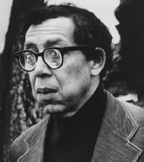
Alice Walker


Thursday, September 12, 2013

Alice Walker, Autobiographical Contract, and Sciences of Memory

[By Jerry Ward, Jr.]


Definition is essential. What does womanist mean and what is its relation to feminist? Does the assertion that womanist is to feminist as purple is to lavender explain saturation as a major difference in historical experience? The various essays, bits of interviews, poetry (inside prose frames) and reviews collected in Alice Walker’s In Search of Our Mother’s Gardens (1983) suggest an answer. They suggest that Walker the novelist is of a “revolutionary” mind like a furious flower, is as serious as was Zora Neale Hurston, Audre Lorde, and Toni Cade Bambara. These women assumed the freedom to create is an entitlement of nature not of man. And they have the backing of words attributed to Sojourner Truth in 1851: “Whar did your Christ come from? From God and a woman! Man had nothin’ to do wid Him.”

Walker’s attitude toward literature has a faint echo of Langston Hughes’s “The Negro Artist and the Racial Mountain.” Do not confuse attitude with heritage. Mountains are gendered property, and in Walker’s case, Sojourner Truth holds the mortgage! Interpretation can take the guise of paying interest, escrow, and principle.


Walker’s trope of the garden has a great deal to do with memory and with the fact that canonized writers have no monopoly in cultivating ART. Context requires remembering that Walker first broadcast ideas about mothers and gardens at the 1973 Phillis Wheatley Festival in Jackson, Mississippi and remembering I had taught The Third Life of Grange Copeland the previous year. My memory of that event and of my teaching has been reactivated by how the biologist Steven Rose commented on the Rosetta Stone in The Making of Memory (1992):


Memory pervades ancient ballads and modern novels alike. Especially in the present century, from James Joyce and Marcel Proust to the new writing of Margaret Atwood, of J. G. Ballard, Toni Morrison, Salman Rushdie and Alice Walker, the theme of personal memory, of the constant examination, interpretation, and reinterpretation of lived experience, is central.

And Rose asked in the same paragraph: Or are we doomed to live always in the divided worlds of subjectivity and objectivity, with no translation possible between these languages? (7)
Mother transmits the seed of art and the desire to grow it into ART to daughter. We are expected to read the fine print in the title essay “In Search of Our Mother’s Gardens” as Walker’s autobiographical contract.

Walker’s recent thinking about her autobiographical contract appears in the appended reader’s guide for Now Is the Time to Open Your Heart (2004). Asked what inspired her to write the novel, Walker replied: “So in Now Is the Time to Open Your Heart I set out to chart such a journey, the adventures of Kate Nelson Talkingtree, who is named partly for a grandmother, my father’s mother, who was murdered when he was a boy.” This novel incorporates Walker’s quest for the culture of the Grandmother, her keeping the faith with the autobiographical contract. Through fiction, Walker provisionally confirms Steven Rose’s idea that sciences of the collective -- “ecology and ethnology, sociology and economics” (7-8) -- are better instruments than the sciences of “individual psychology or neuroscience” (7) for exploring the nature of memory. The jury is still out, however, on any permanent conjoining of subjectivity and objectivity, inside or outside of fictions.

Wednesday, September 11, 2013

Jonathan Kline's first novel


Blurb for Wisdom of Ashes


Jonathan Kline’s Wisdom of Ashes is lagniappe for readers who know New Orleans intimately and for those who hunger for the carnivalesque secrets of the city. The novel echoes the realism of HonorĂ© de Balzac, Mark Twain, and Flannery O’Connor; its texture is blessed by Saint Dymphna. Kline portrays his visions of the city’s time, characters, climates, and rhythms with remarkable distinction.

Jerry W. Ward, Jr., author of THE KATRINA PAPERS: A Journal of Trauma and Recovery

Friday, September 6, 2013

17 Passages


17 Passages for 17 Poets


Language as form

flips flounders flaps


the fire is time  )1


God’s death

was not suicide.


It was the result

of a moral position

incompatible with life. (2


Deception:

a kerosene lamp

in the heart of darkness. )3


Your lips

purple the world. (4


Language

                burns

                blasts

                burnishes.


Music

                blooms. ) 5


When she extends

an invitation,

read her hips. (6


Colorblind candy,

you so dandy.


You so randy,

you so raunchy,

you can’t amos

or do the andy. )7


Refuse to hope

unless uncertainty

invents a virus

to murder hate. (8


                                                                                                17 Passages for 17 Poets, page 2.


Darkness of darkness

So logical it shines


Water enters before a man enters water,

Rides an ark of bones in a space which never heard of time  )9


Native son

did the right thing

In Fort Greene Park

by the soul of a prison ship

martyrs monument.


He wrote the book.(10


After hanging,

Through razoring rain,

Searing sun,

Whipping wind,

Scouring snow

                You shall be

                Lean, beautifully angeled,

                Superbly fit

                To wear designer clothes. ) 11


Your voice

Made the air

Bleed. (12


Shakespeare,

Paragon of plagiarists,

When imagination fails,

Old felon, fly down

From heavenly hell,

Bringing a mercy

Of rain dry as dust,

A cold awakening

For a brain’s slumber.  (13


A crane posed on the lawn for a photograph.

A lion growled at the door for milk.

I shall be surprised to not be at home. )14


17 Passages for 17 Poets, page 3


I need a sign

That you were there

The morning I walked

Out of your life

Into your soul. )15


You know what it means to be New Orleans/ when the trumpet takes a bath in Afro-Sheen (16


Then you pick up your life

After celebrating, barely recollecting

Where you left it, stuff it in

Whatever garments  come to hand, and violently

Hit the streets.  It’s your resurrection after all. )17

Wednesday, September 4, 2013

Sherman Alexie

For the Coeur d'Alene
(after reading Sherman Alexie's War Dances)


Three Jesuit crows sat on a telephone wire,
talking trash about Alexie.

Jesuit #1:  We must ask St. Ignatius to pray for his soul.

Jesuit #2:  Oh, hell no.

Jesuit #3:  Why not?

Jesuit #2:  His soul is praying for us.

Jesuit #1:  Ah, I once was blind but now I see.


September 4, 2013

Note for Richard Wright's 105th Birthday


Note for Richard Wright’s 105th Birthday


                In 1942, the psychologist Fredrick Wertham sent Richard Wright two verses, one on January 15 and the other on May 27.  The haunting lines of the first


Where men have always looked around

And searched for secrets never found,

You saw a vision, dark, profound;

You heard beneath a distant sound;

You took the lid off the Underground.


are illuminated by the second verse entitled Underground


The Freudians talk about the Id

And bring it below

But Richard Wright took off the lid

And let us see the woe.


It is likely that the only works by Wright that Wertham might have read before 1942 were Uncle Tom’s Children, Native Son, and 12 Million Black Voices. His insights about Wright’s intellectual acumen are germane in discussions of Wright’s fiction and non-fiction.  Like William Blake, Wright was a visionary, one who exposed deep recesses of human consciousness.  One is not surprised that he discovered quite early that Freudian theory might conceal as much as it reveals.  Pulling off the lid and urging people to ponder material and mental damages was Wright’s forte.


                On September 4, 2013, I celebrate the presence and power of Richard Wright’s mind.


Jerry W. Ward, Jr.


Note for the note:  Wertham’s correspondence with Wright is contained in the Wright Papers, JWJ Mss 3, Box 108, Folder 1677 at the Beinecke Rare Book and Manuscript Library, Yale University.

Tuesday, September 3, 2013

Robert Hayden

msgbarbottom

25 Aug 13 ROBERT HAYDEN. A CENTENNIAL TRIBUTE.

Robert_Hayden_by_Jay_Semple
Robert Hayden (Jay Semple)
November 1, 2013 – ROBERT HAYDEN: A CENTENNIAL CONFERENCE AND POETRY TRIBUTE
The Department of English at the University of Michigan has announced plans for a one-day conference on November 1, 2013 in honor of Robert Hayden, the distinguished poet and educator who received an M.A. degree from the University of Michigan in 1944 and returned to teach at the university in 1970 as Professor of English until his death in 1980.
Hayden has emerged as a major figure in American literary history. He is the leader, along with Gwendolyn Brooks, of the generation of African American poets that emerged in the 1940s to achieve widespread critical attention and a massive presence in anthologies and textbooks. He served as poetry consultant to the Library of Congress (the position now known as Poet Laureate of the United States) from 1976-1978. The U.S. Post Office issued a postage stamp in 2012 to honor his achievement.
The keynote address of the conference, to be held in the Rackham Amphitheater, will be delivered by Harryette Mullen, Professor of English and Creative Writing at UCLA, a Guggenheim Fellow (among other honors), and a finalist for the National Book Award and the National Book Critics Circle Award. Her volume of essays and interviews, The Cracks Between What We Are and What We Are Supposed to Be, appeared in 2012.
Professor Mullen will be introduced by A. Van Jordan of the U-M faculty. A panel discussion in early afternoon will include Mullen, Linda Gregerson (of the U-M faculty), Lawrence Joseph, a Detroit native and the preeminent Arab-American poet of our time, and Frederick Glaysher, editor of Hayden’s Collected Poems and Collected Prose. Robert Hayden is a character in Glaysher’s recently published epic poem, The Parliament of Poets. Laurence Goldstein, Professor of English and co-editor (with Robert Chrisman) of Robert Hayden: Essays on the Poetry (University of Michigan Press, 2001), will serve as panel moderator.
In late afternoon, MFA students will read from and speak about Hayden’s poems, along with other participants in the conference.
Timetable:
10 a.m. Keynote address by Harryette Mullen
12-1:30 p.m. Lunch at various restaurants around campus
1:30-3:00 p.m. Panel discussion
3:00-5:00 p.m. Readings and remarks by audience members

After presenting some reflections on Hayden and his poetry on the panel, during the late afternoon, I’ll be reading a passage from my epic poem, The Parliament of Poems, from the Persona’s flight to the moon, with his guide, the poet Robert Hayden. Hope you can make it. The day promises to be a worthy tribute to a life well lived for the art of poetry. Please help spread the word far and wide.
Frederick Glaysher

Syllables for Richard Wright


September syllables for Richard Wright


You heard firebird sing:

Warning. The red sun still stands.

Soon, a green sun blooms.


Jerry W. Ward, Jr.

3 September 2013